
Lightweighting for Stronger Sustainability Impact
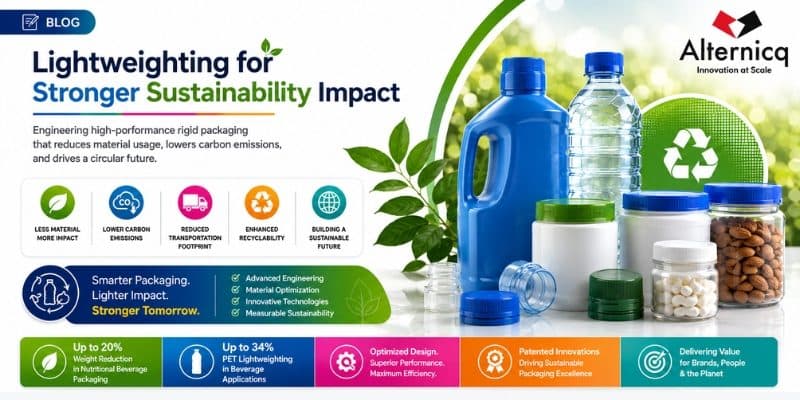
Sustainable packaging today goes beyond reducing material usage. It focuses on creating high-performance packaging solutions that balance product protection, operational efficiency, recyclability, and carbon footprint reduction across the entire packaging lifecycle. Modern packaging innovation increasingly relies on Life Cycle Assessment (LCA), Life Cycle Inventory (LCI), circular economy principles, and material optimization to deliver measurable sustainability outcomes.
Lightweighting has emerged as one of the most impactful sustainable packaging strategies in the rigid plastic packaging industry. It involves redesigning packaging structures to reduce overall material consumption while maintaining product integrity, shelf performance, transportation durability, and consumer convenience.
By reducing resin usage, lightweight packaging helps brands lower carbon emissions, optimize logistics costs, improve material efficiency, and enhance recyclability without compromising functionality or aesthetics.
At Alternicq Limited, lightweighting is integrated into packaging innovation through advanced engineering, material science, structural redesign, and sustainable manufacturing practices.
What is Lightweighting in Plastic Packaging?
Lightweighting refers to the process of reducing the weight of plastic packaging through intelligent structural engineering, optimized material distribution, and advanced manufacturing technologies.
This can be achieved through:
- Thin-wall packaging design
- Neck and closure optimization
- Material substitution and density reduction
- Structural rib enhancements
- Foaming technologies
- Advanced resin engineering
- Design-for-recyclability innovations
The objective is to maximize packaging efficiency while minimizing raw material consumption and environmental impact.
Foaming Technology: Advancing Sustainable Packaging
One of the recent innovations in lightweight plastic packaging is foaming technology.
Foaming is achieved through the controlled infusion of inert gases such as CO₂ or nitrogen (N₂) into suitable polyolefin layers during the manufacturing process. This creates a microcellular structure within the plastic, reducing material density while retaining mechanical strength and functional performance.
Benefits of foamed lightweight packaging include:
- Lower plastic consumption
- Reduced packaging weight
- Improved sustainability metrics
- Lower transportation emissions
- Enhanced material efficiency
- Reduced overall carbon footprint
This technology enables brands to achieve sustainability goals while maintaining packaging durability and consumer experience.
Lightweighting Innovations at Alternicq
At Alternicq Limited, lightweighting is a core part of sustainable packaging innovation across FMCG, beverage, dairy, personal care, and healthcare packaging solutions.
Through continuous packaging redesign and engineering optimization, we have achieved:
- Up to 20% weight reduction for malt-based nutritional beverage packaging
- Up to 34% PET lightweighting for select beverage packaging applications
- Reduced wall thickness without compromising structural performance
- Advanced super short neck jar and cap innovations
- Enhanced closure optimization technologies
- Development of Neck Support Ring (NSR) innovations for bottle and cap weight reduction
- Integration of tamper-evident lightweight packaging features
Our patented and patent-pending packaging technologies are helping global and Indian brands reduce material usage while improving sustainability performance and operational efficiency.
Key Techniques Used in PET Lightweighting
Lightweighting in PET packaging requires a balance between design innovation, manufacturability, filling-line compatibility, and packaging performance.
Some of the most effective PET lightweighting techniques include:
1. Technical Rib Integration
Strategically placed ribs improve structural rigidity and top-load performance while allowing lower wall thicknesses.
2. Neck Finish Optimization
Reducing material usage in bottle necks and closures where internal pressure requirements are minimal helps lower overall resin consumption.
3. Thin-Wall Packaging Design
Optimized wall thickness distribution enables significant material reduction while maintaining functionality and shelf stability.
4. Shape Redesign and Structural Engineering
Container geometry plays a critical role in achieving lightweighting without compromising strength or consumer usability.
5. High Intrinsic Viscosity (I.V.) Resin Utilization
Using higher I.V. resins where feasible improves mechanical performance and allows material reduction.
Operational Considerations in Lightweight Packaging
Successful lightweight packaging development must also account for downstream manufacturing and filling operations.
Filling Line Compatibility
Packaging designed for jet-stream air systems and neck-handling conveyor systems requires specialized structural support below the neck finish to ensure smooth line performance.
Labeling Efficiency
Thin-wall bottles become more flexible before filling, which can affect labeling accuracy. For optimal performance, lightweight PET bottles are often labeled after the filling process.
Transportation and Supply Chain Stability
Packaging must maintain stackability, compression resistance, and transportation durability despite reduced material usage.
Why Lightweighting Matters for Brands
Lightweight packaging delivers both sustainability and business advantages.
Sustainability Benefits
- Lower carbon emissions
- Reduced virgin plastic consumption
- Improved recyclability
- Reduced transportation footprint
- Better resource efficiency
Business Benefits
- Lower packaging costs
- Improved logistics efficiency
- Reduced resin dependency
- Enhanced ESG performance
- Stronger sustainability positioning for consumers and regulators
As brands increasingly focus on circular economy goals and sustainable packaging commitments, lightweighting is becoming a critical innovation driver across industries.
Frequently Asked Questions
How is PET lightweighting achieved?
PET lightweighting is achieved through packaging redesign, thin-wall engineering, neck optimization, structural rib enhancements, and advanced resin technologies that reduce overall packaging weight while maintaining functionality and performance.
Does lightweighting compromise packaging strength?
No. Modern lightweight packaging uses advanced engineering techniques to maintain structural integrity, top-load performance, durability, and filling-line compatibility even with reduced material usage.
What industries benefit from lightweight packaging?
Industries including FMCG, beverages, dairy, pharmaceuticals, home care, personal care, and food packaging benefit significantly from lightweight packaging innovations.
Is Alternicq working on sustainable lightweight packaging solutions?
Yes. Alternicq Limited continues to develop advanced lightweight packaging technologies through structural innovation, material optimization, and sustainable packaging engineering across multiple product categories.
What is the future of lightweight packaging?
The future of lightweight packaging lies in combining recyclable materials, PCR integration, advanced barrier technologies, AI-driven packaging design optimization, and circular economy principles to deliver high-performance sustainable packaging solutions at scale.