
All About Modified Atmosphere Packaging (MAP)
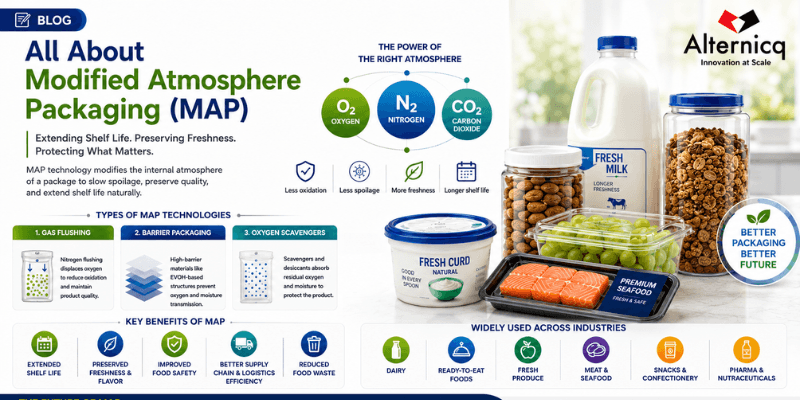
In today’s food and beverage industry, shelf life extension is no longer just about preservation — it is about maintaining freshness, product integrity, safety, sustainability, and consumer trust across increasingly complex supply chains.
Modified Atmosphere Packaging (MAP) has emerged as one of the most effective packaging technologies for extending shelf life while preserving the sensory and nutritional quality of food products. By controlling the gaseous environment inside a package, MAP helps reduce spoilage, minimize oxidation, and maintain freshness for longer durations.
At Alternicq Limited, we continuously explore advanced food packaging technologies that help brands improve product protection, operational efficiency, and sustainability outcomes.
What is Modified Atmosphere Packaging (MAP)?
Modified Atmosphere Packaging (MAP) is a food packaging technology that modifies the internal atmosphere of a package to slow down spoilage and extend product shelf life.
MAP works by controlling gases such as:
- Oxygen (O₂)
- Nitrogen (N₂)
- Carbon Dioxide (CO₂)
The technology reduces oxidation, inhibits microbial growth, and protects the flavor, texture, aroma, and appearance of food products.
MAP is widely used across industries including:
- Dairy packaging
- Ready-to-eat foods
- Snacks and confectionery
- Fresh produce
- Meat and seafood
- Beverages
- Pharmaceutical and nutraceutical packaging
Why Shelf Life Matters in Food Packaging
Shelf life refers to the duration during which a food or beverage product remains safe, stable, and acceptable for human consumption.
Several factors influence shelf life, including:
- Raw material quality
- Product formulation
- Packaging material selection
- Processing methods
- Storage conditions
- Exposure to oxygen and moisture
- Temperature fluctuations
Oxygen and heat are among the biggest contributors to food degradation. They accelerate:
- Oxidation
- Flavor loss
- Discoloration
- Nutrient degradation
- Microbial growth
- Texture changes
While thermal processing technologies are commonly used to extend shelf life, they may not be suitable for every product category. This has increased the adoption of non-thermal preservation methods such as Modified Atmosphere Packaging and active packaging systems.
Types of Modified Atmosphere Packaging Technologies
1. Gas Flushing Technology
Gas flushing is one of the most widely used active MAP technologies in food packaging.
In this process, gases such as nitrogen are introduced into the package before sealing to displace oxygen from the pack environment.
Gas flushing helps achieve three major objectives:
- Delays oxidation by reducing oxygen levels
- Slows the growth of aerobic microorganisms
- Maintains package shape and structural conformity
Nitrogen flushing is especially effective for products sensitive to oxygen exposure, including snacks, coffee, dairy products, and powdered food ingredients.
2. Barrier Packaging Materials
Barrier packaging is a passive MAP approach that uses high-performance packaging materials to limit the transmission of oxygen and moisture.
Common barrier materials include:
- Low-Density Polyethylene (LDPE)
- High-Density Polyethylene (HDPE)
- Polypropylene (PP)
- Multi-layer barrier structures
Many oxygen-sensitive products such as sauces, dairy products, beverages, and nutraceuticals use advanced multi-layer packaging structures.
A key component in high-barrier packaging is EVOH (Ethylene Vinyl Alcohol), a high-performance thermoplastic copolymer known for its exceptional gas barrier properties.
EVOH-based packaging offers:
- Superior oxygen barrier performance
- Extended shelf life
- Improved aroma retention
- Enhanced product freshness
- Reduced food waste
Barrier packaging technologies are increasingly critical in sustainable food packaging because they help improve product longevity and supply chain efficiency.
3. Oxygen Scavengers and Desiccant Systems
Another important MAP solution involves the use of oxygen scavengers and desiccant packs inside packaging.
These systems actively absorb oxygen and moisture from the package environment to prevent spoilage.
Common scavenger components include:
- Iron powder
- Ascorbic acid
- Activated carbon
These ingredients react with ambient oxygen and moisture, helping protect sensitive products from degradation.
Oxygen scavengers are commonly used in:
- Pharmaceutical packaging
- Nutraceutical packaging
- Dry foods
- Powdered products
- Moisture-sensitive products
How Modified Atmosphere Packaging Protects Food
MAP technologies primarily protect food by minimizing oxygen exposure inside the package.
Reduced oxygen levels help:
- Slow oxidation
- Preserve freshness
- Prevent discoloration
- Maintain texture and flavor
- Reduce microbial activity
- Extend shelf stability
This ensures food products remain visually appealing and safe for consumption over longer periods.
Modified Atmosphere Packaging also supports:
- Reduced food wastage
- Improved transportation efficiency
- Longer distribution cycles
- Better retail shelf performance
- Enhanced consumer convenience
The Growing Importance of MAP in Modern Supply Chains
The importance of Modified Atmosphere Packaging increased significantly during the COVID-19 pandemic, when consumers shifted toward packaged foods with extended shelf life and higher safety assurance.
Today, evolving consumer behavior, e-commerce grocery growth, global supply chains, and sustainability goals continue to accelerate demand for advanced food packaging technologies.
Brands are increasingly investing in:
- Sustainable barrier packaging
- Recyclable food packaging
- High-performance mono-material solutions
- Active packaging systems
- Circular packaging innovations
The Future of Modified Atmosphere Packaging
The future of MAP lies at the intersection of sustainability, smart packaging, and advanced material science.
Emerging trends include:
- Recyclable barrier packaging
- Mono-material MAP structures
- PCR-integrated food packaging
- Intelligent freshness indicators
- AI-driven shelf life optimization
- Sustainable active packaging technologies
As food brands continue to prioritize sustainability and product performance, Modified Atmosphere Packaging will remain a key enabler of next-generation packaging innovation.
Frequently Asked Questions
What is Modified Atmosphere Packaging (MAP)?
Modified Atmosphere Packaging is a packaging technology that alters the internal gas composition of a package to slow spoilage and extend shelf life.
What gases are used in MAP packaging?
The most commonly used gases are nitrogen (N₂), carbon dioxide (CO₂), and oxygen (O₂), depending on the product requirements.
What are the benefits of MAP packaging?
MAP packaging helps:
- Extend shelf life
- Maintain freshness
- Reduce oxidation
- Improve food safety
- Minimize food waste
- Preserve flavor and texture
Which industries use MAP packaging?
Industries such as food and beverage, dairy, pharmaceuticals, nutraceuticals, personal care, and healthcare widely use MAP technologies.
Does Alternicq offer advanced packaging solutions for shelf life enhancement?
Yes. Alternicq Limited develops innovative rigid plastic packaging solutions designed to enhance product protection, sustainability, and packaging performance across industries.